

Blog
What Does a Gemstone Certificate Tell You About a Sapphire?

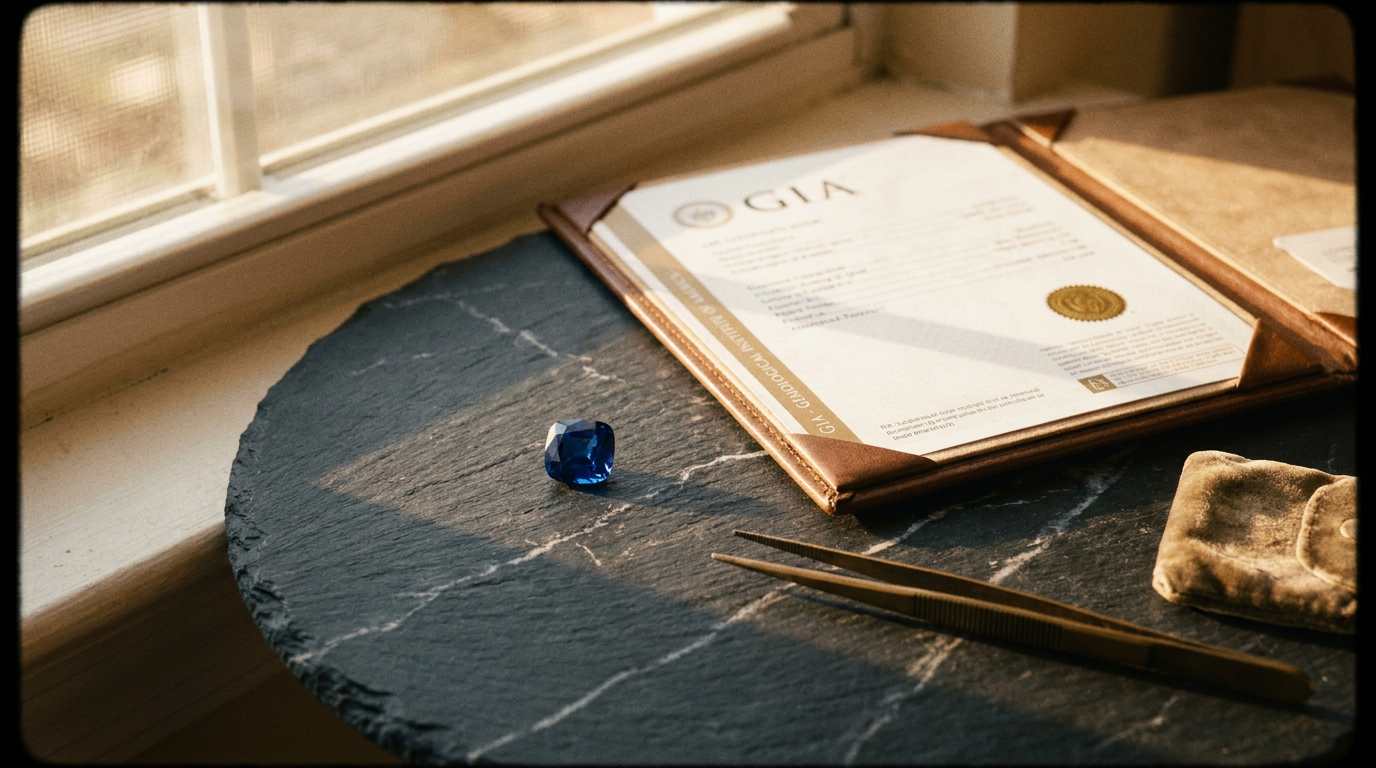
When purchasing a valuable sapphire, you may hear sellers refer to a gemstone certificate or laboratory report.
This document can provide useful information about the gemstone, but it is important to understand what it does and does not tell you.
At R & Q Sapphire House, we encourage customers to understand the information provided with their gemstones.
1. What Is a Gemstone Laboratory Report?
A gemstone laboratory report is a document issued after a gemstone has been examined by a gemological laboratory.
The report records the laboratory’s findings based on the tests carried out on that specific stone.
The information included depends on the laboratory and the type of report requested.
2. Natural or Laboratory-Created
One important purpose of gemological testing is to determine whether a gemstone is natural or laboratory-created.
This distinction can be difficult for an untrained buyer to make based only on appearance.
3. Gemstone Identification
A report may identify the stone as sapphire or another gemstone variety.
Sapphire belongs to the mineral family known as corundum.
Proper identification helps buyers understand what they are purchasing.
4. Treatment Information
Many gemological reports include information about whether evidence of treatment has been detected.
For sapphire, heat treatment is an important example.
Depending on the laboratory and testing results, a report may state whether heating or other relevant treatment indicators were detected.
5. Weight and Measurements
Reports commonly include physical information such as the gemstone’s weight and measurements.
This information helps identify the specific stone linked to the report.
6. Colour Description
Some reports provide a description of the gemstone’s colour.
However, colour terms may vary depending on the laboratory’s reporting system.
The actual appearance of a gemstone should still be considered when making a purchase.
7. Geographic Origin
Certain laboratories may provide an opinion about geographic origin when sufficient evidence is available.
For example, a laboratory may investigate whether a sapphire shows characteristics consistent with gemstones from a particular region.
Geographic origin determination is specialised and may not be included in every report.
8. Does a Certificate Tell You the Price?
Usually, a gemological identification report is not the same as a valuation or appraisal.
It may describe the gemstone but does not necessarily tell you what the sapphire is worth.
Market value can be influenced by many factors, including colour, clarity, cut, size, treatment, origin, rarity, and demand.
9. Always Match the Report to the Gemstone
When buying a certified gemstone, check that the details on the report correspond to the stone being offered.
Measurements, weight, identifying information, and report numbers can help confirm this.
Buy with Better Understanding
A gemstone report can provide important technical information, but it should be considered together with the sapphire’s beauty, condition, seller disclosure, and your own preferences.
At R & Q Sapphire House, we believe informed buyers are better prepared to choose gemstones with confidence.
Understand the stone, understand the report, and make your sapphire purchase with greater confidence.